
Common Noises That Signal Garage Door Opener Repair
- Commercial Garage Door Repair
- Garage Door Opener Installation
- Garage Door Spring Repair
- Same Day Garage Door Repair
- Custom Garage Door
- Garage Door Opener Repair
- Garage Door Track Repair
- Gate Repair
- Garage Door Cable Repair
- Garage Door Panel Repair
- Local Garage Door Repair
- Garage Door Replacement
- Noisy Garage Door Fix
- Garage Door Installation
- Garage Door Section Replacement
- Overhead Garage Door Repair
Common Noises That Signal Garage Door Opener Repair
Your garage door should operate with a rhythmic, predictable hum. When that smooth sound transforms into a chorus of mechanical protests, your system is likely crying out for a garage door opener repair from Local Garage Door Repair Boca Raton FL. Ignoring these auditory warnings often leads to total mechanical failure, potentially trapping your car inside or creating a serious safety hazard. Understanding what these specific sounds mean helps you catch minor issues before they escalate into expensive replacements. By paying close attention to the personality of your garage door’s noise, you take the first step toward maintaining a reliable and secure home entry point.
Identifying Grinding and Squealing Sounds
Metal-on-metal noises usually indicate that your system lacks proper lubrication or that specific components have reached the end of their lifespan. If you hear a high-pitched squeal, the rollers might be sticking rather than rolling along the track. This friction puts immense strain on the motor.
A harsh grinding noise often signals a more serious internal issue within the opener itself. In many chain-drive or belt-drive models, a plastic drive gear sits inside the motor housing. Over time, the teeth on this gear can strip away, creating a loud grinding sound as the motor spins without moving the door. If you notice this sound, you must stop operating the door immediately to prevent further damage to the motor assembly.
Rattling and Vibrating During Operation
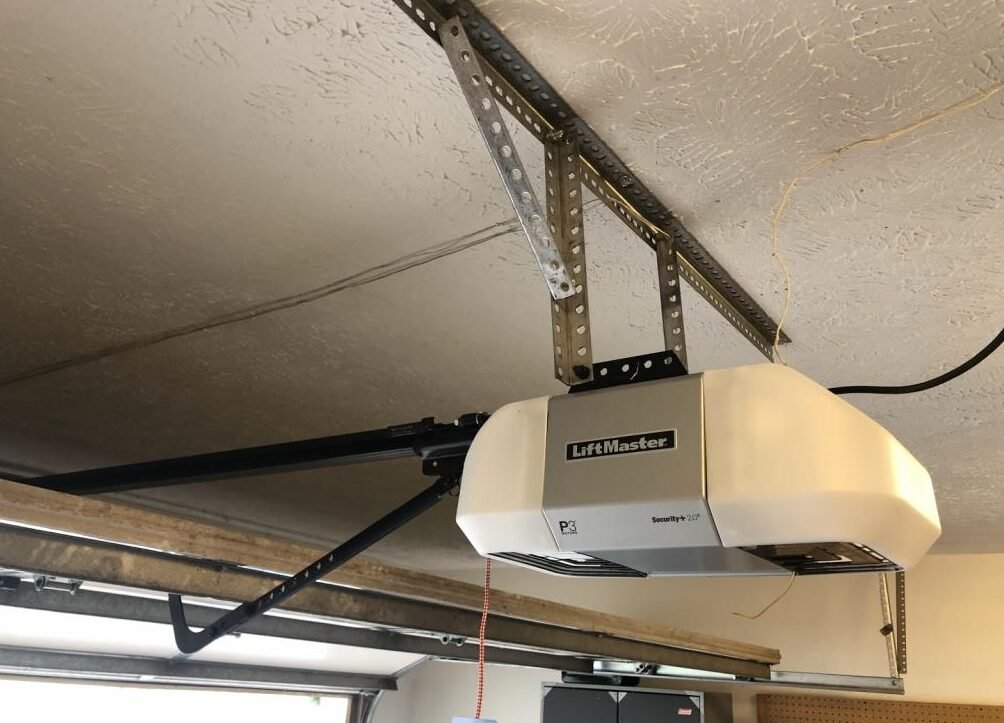
Excessive vibration often suggests that the mounting hardware has loosened over time. Because garage doors move heavy loads every day, the constant motion can back out screws and bolts. Check the brackets that attach the opener to the ceiling; if they wiggle, they require tightening.
Vibrations can also stem from an unbalanced door. When the springs lose their tension, the opener must work twice as hard to lift the weight. This struggle causes the entire housing to shake and rattle. You can test this by pulling the emergency release cord and lifting the door halfway by hand. If the door crashes down or feels incredibly heavy, your springs—not just the opener—need professional adjustment to prevent the motor from burning out.
Banging and Clunking Noises
A sudden bang usually points toward a broken torsion spring, which sounds like a gunshot echoing through the garage. However, a consistent “clunk” as the door travels suggests a problem with the horizontal tracks or the trolley. If the tracks fall out of alignment, the rollers will hit the joints at an awkward angle, creating a jarring thud.
Bent tracks also cause the door to “jump” during its cycle. This jerky movement forces the opener to compensate for the resistance, leading to a strained, pulsing sound from the engine. Debris trapped in the tracks, such as small rocks or hardened grease, can also create rhythmic thumping sounds that signal your system requires a thorough cleaning and a professional inspection.
Maintaining a quiet garage door requires proactive attention to these warning signs. Most mechanical issues start as small, noisy nuisances before they become catastrophic failures. When you hear these red flags, scheduling a professional garage door opener repair saves you time, money, and frustration in the long run. If your door is making sounds that worry you, contact the experts at Local Garage Door Repair Boca Raton FL. Our technicians possess the tools and experience to silence the noise and restore the safety of your garage system quickly and efficiently.